Diamond Bar Investment Properties: A Small Investor Guide
May 7, 2026
May 7, 2026
If you are looking for a small rental property in Diamond Bar, the numbers can feel a little confusing at first. Home prices are high, the renter pool is smaller than in many nearby cities, and not every property type performs the same way. The good news is that with the right lens, you can quickly see where this market may fit your goals and where you need to be more careful. Let’s dive in.
Diamond Bar is a suburban city in eastern Los Angeles County with about 52,292 residents spread across roughly 14.9 square miles. It is a mostly owner-occupied market, with a 77.3% owner-occupied housing rate and about 18,629 dwelling units. That alone makes it different from investor-heavy areas where turnover and renter demand are the main story.
For small investors, this usually points to a market shaped more by stability than by churn. Census data also shows a median household income of $108,281, a median age of 45.6, and about 2.95 persons per household. Those figures suggest many households are looking for practical space, predictable neighborhoods, and housing that supports daily life and commuting.
Diamond Bar does not read like a dense apartment market with constant turnover. The city has a smaller renter share than many nearby suburbs, and the local demographics suggest demand may come from households looking for a suburban setting, commute convenience, and room to live.
Census QuickFacts shows 19.0% of residents are under 18, 21.0% are 65 and older, 47.3% are foreign-born, and 63.3% speak a language other than English at home. The mean commute is 33.3 minutes. While this is not a formal tenant survey, it supports a reasonable view that demand may be strongest among higher-income commuters, multilingual households, and residents seeking larger or more functional homes.
In Diamond Bar, property type can change your investment story in a big way. A one-bedroom unit may fill a need, but the market data points more clearly toward demand for family-sized homes, townhomes, and larger layouts.
Median gross rent is $2,521 according to Census QuickFacts. More current rental snapshots show Zillow at an average rent of $3,165 as of March 31, 2026, and Realtor.com at a median rental price of $3,800 per month. Rentometer estimates also suggest roughly $2,194 for one-bedroom apartments, $2,610 for two-bedroom apartments, $3,845 for three-bedroom houses, and about $4,872 for four-bedroom-plus houses.
That pattern matters. If you are buying in Diamond Bar, larger homes and well-located townhomes may align better with the likely renter profile than very small units. It does not mean smaller properties cannot work, but it does mean you should be careful not to underwrite this city like a high-density rental corridor.
This is one of the biggest takeaways for small investors. Diamond Bar looks more like an equity-growth and tenant-quality market than a pure cash-flow market.
Using Redfin’s March 2026 median sale price of $1,117,500, current asking-rent estimates imply a rough gross yield of about 3.4% using Zillow’s average rent and about 4.1% using Realtor.com’s median rent. Those are only broad, pre-expense estimates, and they use different data sources and methodologies. Still, the message is fairly clear: if you need strong day-one cash flow, Diamond Bar may feel tight.
On the other hand, appreciation has been notable. The city’s finance report shows median single-family residential sale prices rising from $570,000 in 2016 to $955,000 in 2024 and $961,250 in 2025. Redfin’s March 2026 market snapshot puts the median sale price at $1,117,500, up 6.4% year over year, with homes selling after 53 days on market.
For many small investors, that creates a different playbook. Instead of chasing the highest monthly spread, you may be looking for long-term value growth, steady occupancy, and a property you can improve over time.
One of the easiest mistakes in Diamond Bar is assuming the same location story applies across the whole city. It does not. The city includes schools in both Walnut Valley Unified and Pomona Unified, and attendance areas can vary by address.
The city’s school directory includes Diamond Bar High, Diamond Ranch High, Chaparral Middle, Lorbeer Middle, Castle Rock Elementary, Maple Hill Elementary, Armstrong Elementary, Evergreen Elementary, and Golden Springs Elementary. The city’s annual report also notes that Diamond Bar includes multiple elementary, middle, and high school campuses across both districts.
For investors, the practical point is simple: verify school assignment before you write your offer or build your pro forma. In a market where many households may care about location details tied to daily routines, address-level accuracy matters.
Townhomes and condos can be attractive in Diamond Bar, especially for smaller investors who want a lower entry point than a detached house. But you need to separate the purchase price from the ownership structure and ongoing costs.
The city’s recorder data defines single-family residential broadly enough to include stand-alone homes plus townhouses and condos with common walls. That means some appreciation trend lines include multiple housing types. If you are pulling comps or projecting future resale, you need to compare like with like.
You should also break out:
A townhome with solid rental flexibility and manageable dues may pencil very differently from a similar-looking unit with tighter rules or weaker reserves.
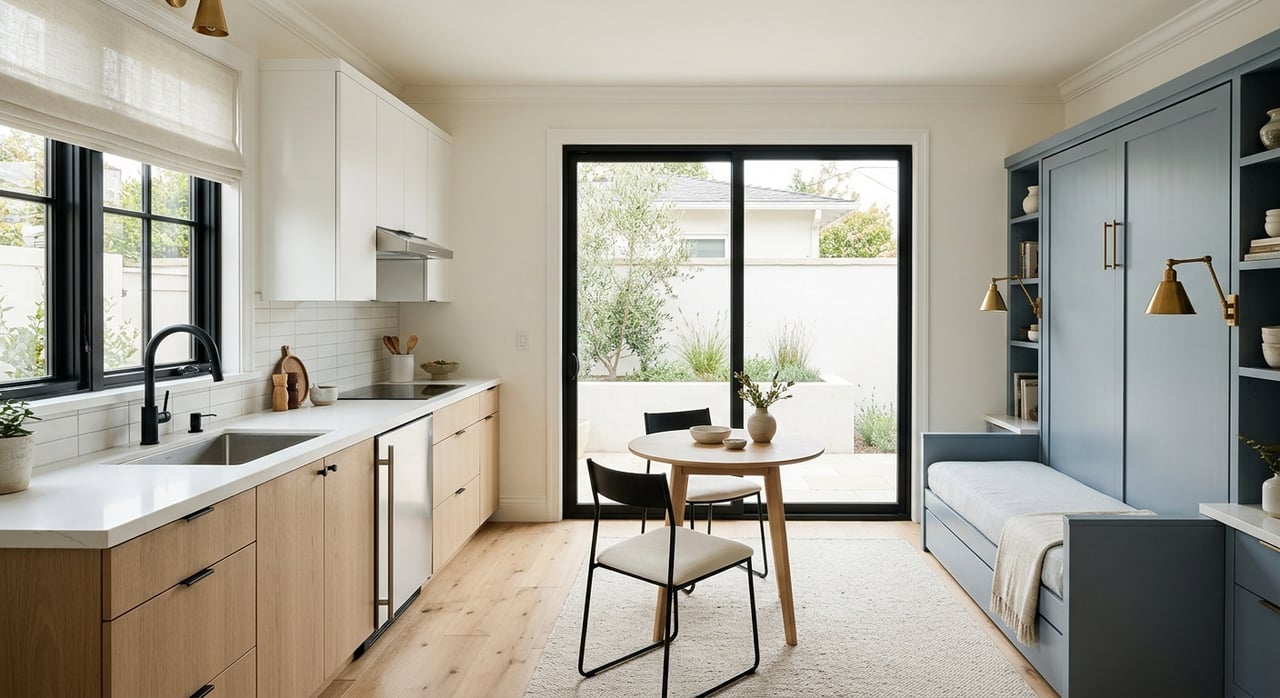
If you are open to value-add opportunities, ADUs may be worth a serious look in Diamond Bar. The city allows ADUs and JADUs in residential and mixed-use districts, and the current standards create some useful options for small investors.
Diamond Bar’s ADU standards say the city allows an 800-square-foot ADU on all residential lots, requires 4-foot side and rear setbacks, and caps detached ADUs at 16 feet in height. JADUs are limited to 500 square feet. The city also states that ADU leases must be longer than 30 days, so short-term rentals are not allowed.
The city offers a pre-approved DBADU program that can move a project directly to plan check without pre-screening. That may help reduce some friction during planning. For an investor, that kind of clarity can make a meaningful difference in timeline and cost assumptions.
There are also a few details that can materially affect the pro forma:
Those thresholds can make smaller ADU projects, garage conversions, and compact backyard units more attractive than they first appear.
Some investors worry that future housing growth will soften rents or weaken resale value. In Diamond Bar, the bigger picture looks more measured than dramatic.
The city’s 2040 General Plan and 2021-2029 Housing Element point to infill growth rather than broad neighborhood expansion. The city says up to 3,750 new housing units could be built by 2040 depending on market conditions, and the certified Housing Element assigns Diamond Bar a regional housing growth need of 2,521 units.
One notable area is the Town Center Specific Plan, which focuses on about 45 acres along Diamond Bar Boulevard for a more pedestrian-oriented mixed-use district. For investors, that suggests future supply pressure may be concentrated in select infill locations rather than spread evenly across the whole city.
If you are buying a rental in Diamond Bar, do not stop your underwriting at rent and mortgage. California tenancy rules can directly affect income growth and exit planning.
The Tenant Protection Act caps many covered units at 5% plus CPI, or 10% total, over a 12-month period and requires just cause for covered terminations. That means your rent-growth assumptions should be grounded in current law, not just market asking rents. A property that looks flexible on paper may operate very differently once tenant protections are factored in.
This is where disciplined underwriting matters. Small investors often win not by making bold assumptions, but by avoiding expensive ones.
Insurance is another area where Diamond Bar investors should be proactive. Redfin’s First Street data flags Diamond Bar with moderate wildfire risk and minor flood risk over a 30-year horizon.
That does not tell you the exact premium for a given property, but it does tell you to quote insurance early. If you wait until late in escrow to test that cost, your cash flow picture may shift more than expected.
Before you buy, focus on the issues most likely to change your returns:
In a market like Diamond Bar, smart investing usually comes down to precision. The better your assumptions, the better your odds of buying the right property for the right reason.
If you want help analyzing a Diamond Bar rental, comparing townhome versus single-family numbers, or identifying ADU potential before you make an offer, Tony Hong can help you approach the decision with clear financial insight and local context.
Stay up to date on the latest real estate trends.

Why Buyers and Sellers Are Both Hesitating
Etiam non quam lacus suspendisse faucibus interdum. Orci ac auctor augue mauris augue neque. Bibendum at varius vel pharetra. Viverra orci sagittis eu volutpat.
TONY M. HONG | CA DRE# 02144918
Office ID# 02022092
Mobile: (714) 872-7533
Office: (213) 675-6562
tony.hong@tonyrealestategroup.
110 E Wilshire Blvd #G1 Fullerton CA 92832
