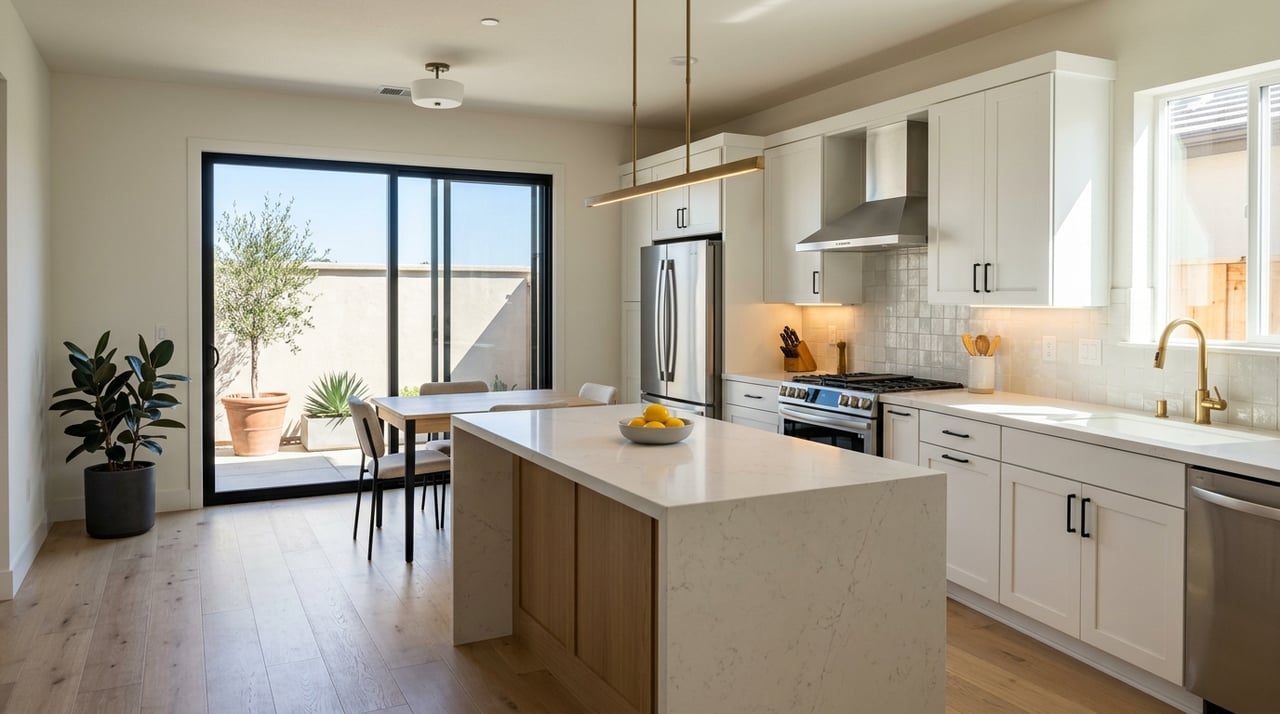
Norwalk: Should You Sell to an Investor or an Owner?
April 16, 2026
April 16, 2026
If you are selling a home in Norwalk, one question can shape your pricing, prep, and marketing strategy right away: should you target investors, owner-occupants, or both? The answer is not always obvious, especially in a market where owner-occupied housing is common, rental demand still matters, and well-priced homes can attract multiple buyer types. This guide will help you understand how each audience evaluates a property in Norwalk, what features matter most, and how to position your home to protect your net proceeds. Let’s dive in.
Norwalk sits in a market with a strong owner-occupant base, but it also has real rental and investor relevance. According to the U.S. Census QuickFacts for Norwalk, 68.3% of housing units are owner-occupied, the median owner-occupied home value is $644,700, median gross rent is $2,090, and the average household size is 3.60 people.
Current for-sale conditions also matter. Realtor.com’s Norwalk market overview reports a median listing price of $724,083, a median sale price of $719,667, and a 100% sale-to-list price ratio, while describing Norwalk as a seller’s market. That tells you buyers are active, but it does not mean every home appeals equally to every buyer pool.
On the rental side, Zillow’s Norwalk rental trends show an average rent of $2,576, with averages of $1,950 for a one-bedroom, $2,576 for a two-bedroom, $3,500 for a three-bedroom, and $4,173 for a four-bedroom. Zillow labels the rental market as cool, which suggests investor demand may be present but selective. In other words, an investor is still likely to run the numbers carefully.
An owner-occupant usually asks, “Can I see myself living here?” An investor is more likely to ask, “Will this property rent well, and does the price make sense relative to income potential?” Both groups can buy the same home, but they often focus on different details.
For owner-occupants, the home experience matters. Zillow’s 2024 buyer housing trends report found that buyers care most about air conditioning, staying within budget, bedroom count, square footage, private outdoor space, layout, and off-street parking or a garage. The same report also found that 86% of buyers are more likely to view a home if the listing includes a floor plan they like.
For investors, the lens is more financial. Realtor.com’s investor report says investors bought 10.8% of U.S. homes in Q2 2025, with small investors accounting for 62.5% of investor purchases. The same report notes that California investors paid the largest premium over the median market purchase amount, and that the Los Angeles metro had a higher median investor purchase price than the overall market.
That broader Los Angeles trend is useful for Norwalk, but your specific property still needs to make sense. Because Norwalk is a seller’s market on the resale side while Zillow labels rentals as cool, investor interest should be treated as opportunity, not a guarantee.
Marketing your home toward investors can make sense when the property’s strongest story is about rental practicality, layout efficiency, or value-add potential rather than polished move-in appeal.
This approach may fit best if your home has:
Bedroom count matters more than many sellers realize. In Norwalk, Zillow’s rent data shows a large jump between average one-bedroom rent and average three-bedroom rent. That does not guarantee a certain return, but it does suggest that homes with broader household appeal may also be more interesting to small landlords.
Investor-focused marketing can also be useful if your home is unlikely to win on emotional presentation alone. A home with dated finishes but a sensible floor plan, usable outdoor area, and solid bedroom count may still attract strong interest if the pricing is disciplined.
If your home shows well and feels easy to live in, owner-occupants are often your best audience. This is especially true in a city like Norwalk, where the owner-occupied share is relatively high.
Owner-occupant marketing is usually the better fit when your home offers:
That strategy can widen your buyer pool, especially among households who care about payment, closing costs, and overall budgeting. The National Association of Realtors 2025 buyer and seller profile coverage shows first-time buyers remain financially stretched, with many using down payment assistance and many reporting higher-than-expected closing costs. For you as a seller, that means clarity matters.
When owner-occupants evaluate your listing, they often respond best when the home feels understandable and manageable. Strong photos, a floor plan, and a realistic price can do a lot of work.
Some Norwalk homes should not be forced into a single box. If your property has a practical layout, a competitive price, and decent overall condition, the smartest approach may be to market to both investors and owner-occupants at the same time.
This dual-track strategy often works well for:
The key is how the listing is framed. For owner-occupants, you highlight livability, layout, storage, parking, and outdoor use. For investors, you highlight bedroom count, rentability, and the property’s practical floor plan. The facts stay the same, but the presentation speaks to both motivations.
Not every improvement adds equal value. If you want broad appeal, focus first on updates that make the home feel clean, functional, and easy to understand.
The most useful prep steps for both groups often include:
These improvements help owner-occupants picture daily life more easily. They also help investors assess the condition and layout without guessing.
A floor plan deserves special attention. Zillow’s buyer research shows many buyers are more likely to view a home when the listing includes a floor plan they like, and many say seeing the home in person is the only way to truly understand layout. For sellers, that means a floor plan can improve both online engagement and in-person showing quality.
Some upgrades are more audience-specific. If you spend money without a clear strategy, you risk lowering your return.
Upgrades more likely to help owner-occupants include:
Features more likely to matter to investors include:
If the home is older or dated, a light-prep strategy may outperform a full remodel. In many cases, clean, neutral, and functional beats expensive and highly customized.
Rent comps can be helpful, but they should not fully drive your sale price unless investor demand is clearly your main audience. In Norwalk, sale pricing still sits inside a seller’s market, and owner-occupants make up a large share of the housing base.
That said, rent still matters. Using Zillow’s average rent and Realtor.com’s median sale price, the rough gross rent yield comes out near 4.3% before expenses. This is not a net return, and it should not be treated as one. It is only a quick directional check.
For an investor, the relationship between purchase price and expected rent is central. For an owner-occupant, monthly affordability, layout, and lifestyle fit may outweigh rental math. A smart pricing strategy weighs both, but usually gives more weight to the buyer pool most likely to compete for your home.
In Norwalk, two-bedroom, three-bedroom, and four-bedroom homes may attract meaningfully different buyers. That does not mean one category is always better, but it does mean your marketing should reflect the likely audience.
Two-bedroom homes may appeal to smaller owner-occupant households, downsizers, or buyers prioritizing budget. Investors may still look at them, but the tenant pool can be narrower than for larger homes.
Three-bedroom homes often have the widest overlap. Based on Norwalk rent trends, the rent step-up from smaller units makes this layout more interesting to investors, while owner-occupants still value the extra flexibility for household needs, work-from-home use, or guests.
Four-bedroom homes can appeal to buyers who need more space and to investors evaluating higher-rent potential. Zillow’s Norwalk rent data shows a notable jump in average rent at this size, which can strengthen investor interest if the purchase price stays in line.
This is one of the most important seller decisions. In Norwalk, an as-is strategy may work if the property is priced to reflect condition and the investor story is strong. But if the home can be improved with modest prep, that extra effort may attract more owner-occupants and create stronger competition.
A light-prep strategy is often worth considering when:
An as-is strategy may make more sense when:
The best choice depends on your property’s condition, likely buyer pool, timeline, and net sheet. This is where financial analysis matters. A small amount of prep can improve your outcome, but only if the added sale price meaningfully outweighs the cost.
The biggest mistake Norwalk sellers make is assuming all demand is the same. It is not. A polished, move-in-ready home may earn stronger interest from owner-occupants, while a practical home with good bedroom count and modest finishes may also attract investors. In many cases, the winning strategy is not picking one audience too early, but understanding which group is most likely to compete hardest for your specific property.
If you want a pricing and marketing plan built around your home’s likely buyer pool, local comps, and realistic net outcome, Tony Hong can help you evaluate whether your Norwalk property should be positioned for investors, owner-occupants, or both.
Stay up to date on the latest real estate trends.


Etiam non quam lacus suspendisse faucibus interdum. Orci ac auctor augue mauris augue neque. Bibendum at varius vel pharetra. Viverra orci sagittis eu volutpat.
TONY M. HONG | CA DRE# 02144918
Office ID# 02022092
Mobile: (714) 872-7533
Office: (213) 675-6562
tony.hong@tonyrealestategroup.
110 E Wilshire Blvd #G1 Fullerton CA 92832
