Los Angeles Housing Affordability in 2026, Clearly Explained
Tony M. Hong March 14, 2026
Tony M. Hong March 14, 2026
If the housing market has felt confusing lately, you're not alone.
There’s one statistic that explains a lot of the hesitation we’re seeing from both buyers and sellers right now.
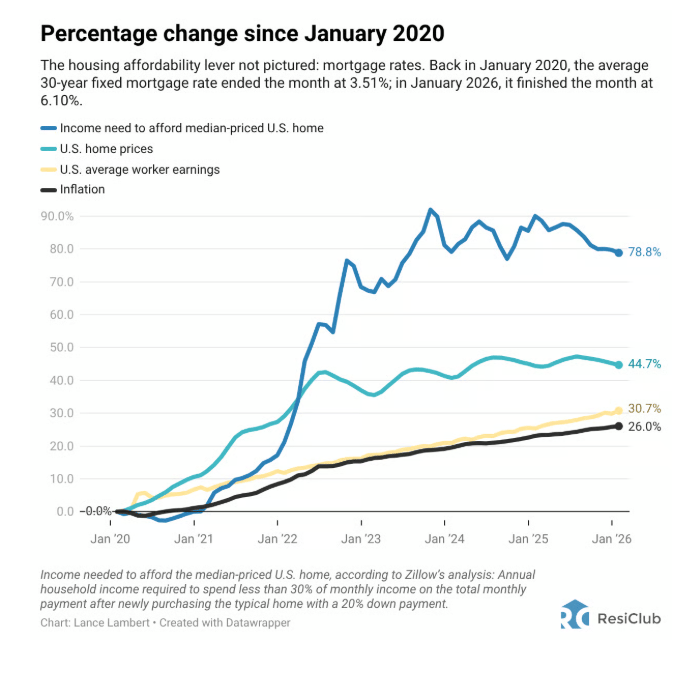
The income needed to purchase the typical U.S. home has increased by about 79% in the past six years.
That shift represents one of the fastest changes in housing affordability we’ve seen in decades.
In 2020, a household needed roughly $52,000 in income nationally to afford the typical home.
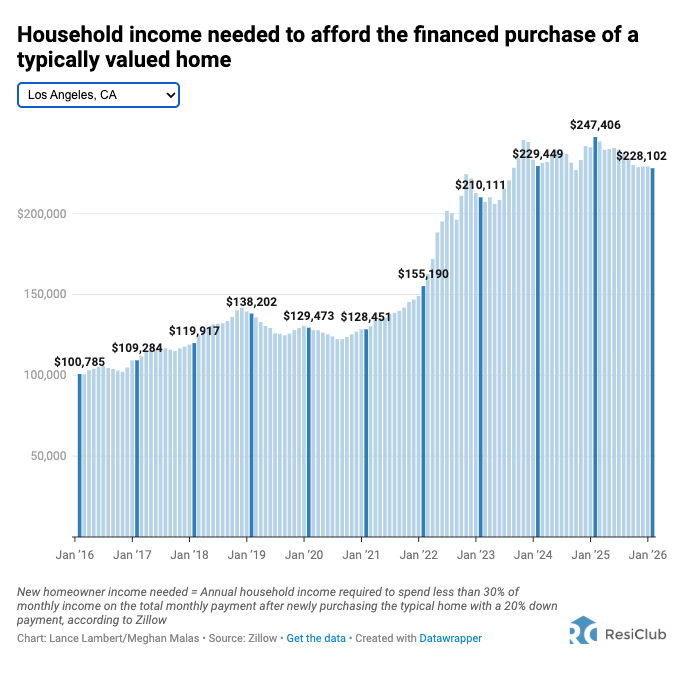
In Los Angeles, that number was already significantly higher at about $129,000.
Today, the numbers look very different:
United States: About $93,000 in income required — a 79% increase
Los Angeles: About $228,000 required — roughly a 77% increase
That rapid change is a major reason why both buyers and sellers are approaching today’s housing market more cautiously.
Several forces came together very quickly during the pandemic years.
First, mortgage rates dropped below 3%, dramatically increasing buying power and creating a surge in demand.
At the same time, housing supply couldn’t keep up. Construction slowed, inventory tightened, and competition intensified.
Home prices rose quickly as a result. Today, the typical U.S. home value remains roughly 45% higher than it was in 2020.
Then the second major shift occurred.
Mortgage rates moved from the 2–3% range to the low 6% range, which significantly increased monthly payments for new buyers.
Meanwhile, incomes have not kept pace with the rapid rise in housing costs.
This combination has created a market where many families feel caught between wanting to move and wanting more financial certainty.
Across Los Angeles County, Orange County, and Riverside County, these dynamics are very visible.
Many buyers today are carefully evaluating monthly payments. At the same time, many existing homeowners are reluctant to give up their 2–3% mortgage rates.
As a result, the market often feels somewhat stuck, with fewer people moving even though life circumstances continue to change.
One important point often gets lost in housing headlines.
Despite short-term market cycles, homeownership has historically been one of the most consistent ways households build wealth over time.
Several factors contribute to this.
Each mortgage payment gradually reduces the loan balance, turning monthly housing costs into ownership and equity.
At the same time, home values have historically tended to rise over longer periods of time.
Real estate also allows homeowners to control a large asset with a relatively small down payment. When these forces work together over many years, they can create meaningful financial growth.
Another factor affecting today’s market is lower transaction volume.
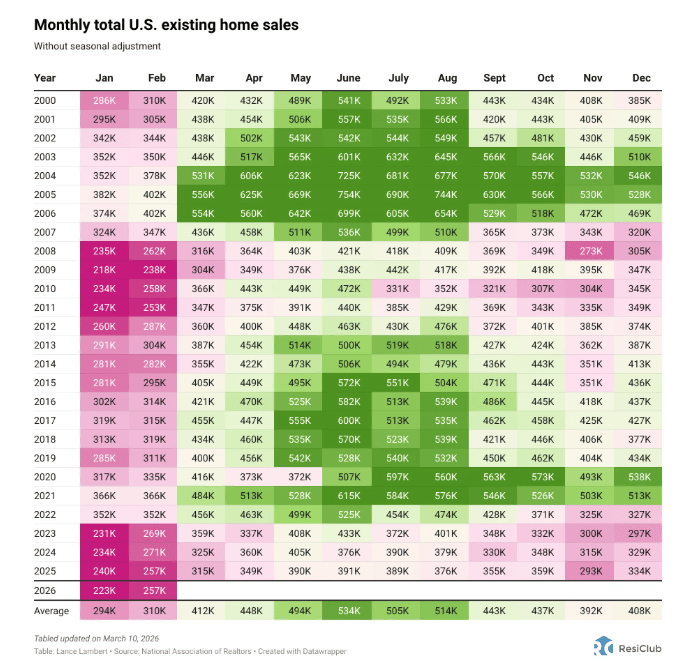
Since 2000, the month of February has averaged about 310,000 existing home sales nationally.
This year, we’re closer to 257,000, suggesting overall housing turnover remains somewhat constrained.
However, even in slower environments, some buyers and sellers are able to navigate the market more effectively than others with the right strategy and preparation.
The current housing market isn’t simply “good” or “bad.” It’s more nuanced than that.
Affordability has changed quickly, which has made many families more cautious. But life events—career changes, growing families, downsizing, relocation, and investment opportunities—continue regardless of market cycles.
The most important thing is understanding the landscape clearly before making major decisions.
If you're curious about how these trends are affecting your neighborhood in Los Angeles or Orange County, or if you’re wondering whether this spring might be a good time to make a move, I’m always happy to help provide context.
Understanding the numbers and local market conditions can make a big difference when planning your next step.
Tony Hong
Realtor | Tony Real Estate Group
DRE#02144918
📞 714-872-7533
✉️ [email protected]
🌐 https://tonyrealestategroup.com
Stay up to date on the latest real estate trends.

Etiam non quam lacus suspendisse faucibus interdum. Orci ac auctor augue mauris augue neque. Bibendum at varius vel pharetra. Viverra orci sagittis eu volutpat.
TONY M. HONG | CA DRE# 02144918
Office ID# 02022092
Mobile: (714) 872-7533
Office: (213) 675-6562
tony.hong@tonyrealestategroup.
110 E Wilshire Blvd #G1 Fullerton CA 92832