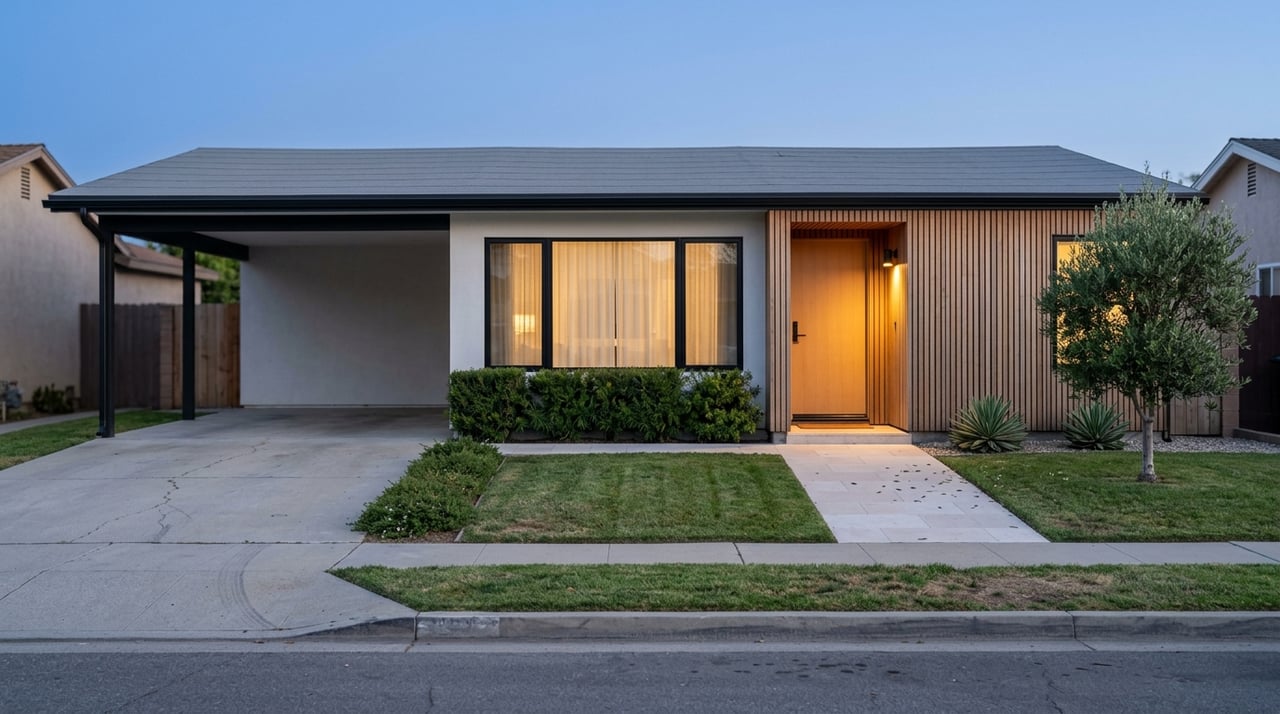
Norwalk Rental Market Guide For LA Commuters
June 25, 2026
June 25, 2026
If you commute to Los Angeles but want a rental market that feels more practical than chaotic, Norwalk deserves a close look. You are probably balancing rent, drive time, parking, and day-to-day convenience all at once, and that can make your search feel overwhelming fast. The good news is that Norwalk offers a more commuter-oriented rental market with multiple transit and freeway connections, plus pricing that is often more accessible than many nearby Los Angeles County communities. Let’s break down what that means for you.
Norwalk sits in a mid-priced rental range for the area, with pricing that looks fairly steady rather than overheated. Current market sources vary a bit because they track different property types, but they point to a similar overall picture.
Zillow reports an average rent of $2,395 across all property types, with 85 active rentals and a cool market reading. RentCafe, which focuses on apartments, reports an average of $2,340, with one-bedrooms around $1,978, two-bedrooms around $2,752, and three-bedrooms around $3,227.
Apartments.com shows similar apartment pricing, with studios around $1,638, one-bedrooms at $1,946, two-bedrooms at $2,382, and three-bedrooms at $3,220. It also reports that houses average about $3,435 per month, which is a useful reminder that detached homes and apartments can sit in very different price bands.
For most renters, the sweet spot in Norwalk appears to be the low-to-mid $2,000s. RentCafe reports that 33% of rentals fall between $2,001 and $2,500 per month, which lines up with what many commuters may be targeting when they want a balance of cost and access.
The broader takeaway is simple: Norwalk does not read like a fast-spiking rental market right now. It looks more like a stable, commuter-friendly option where pricing is easier to plan around than in some neighboring areas.
For many renters, location is not just about the address. It is about how quickly you can get on the road, whether you have a backup route, and how easy it is to connect your home to work, the airport, or other parts of Southern California.
Norwalk stands out because of its transportation access. Caltrans identifies the I-5 South Corridor segment between I-605 and the Orange County line as traversing and impacting Norwalk, and it identifies Route 105 near the city as the Norwalk Freeway.
If you drive to Los Angeles, Orange County, or nearby job centers, freeway proximity can shape your whole routine. In practical terms, rentals with easier access to I-5, I-605, and the 105 may appeal more to commuters than similar units that add extra local-street time before you even start your trip.
That does not mean every renter should choose the unit closest to a freeway. It does mean you may want to weigh commute efficiency alongside rent, parking, and unit size when comparing options.
Norwalk also offers multiple transit links that can help if you want alternatives to driving every day. Metro says the C Line runs from Norwalk to the LAX/Metro Transit Center, and Metro bus Line 111 serves Norwalk to the LAX area.
The Norwalk/Santa Fe Springs Metrolink station serves the Orange County and 91/Perris Valley lines. The station has 630 parking spaces, uses permit-based parking, and Norwalk Transit Route 4 directly connects the Metrolink station with the C Line station.
That mix gives you options. If your work, travel, or family schedule changes, a rental with good first- and last-mile access may give you more flexibility than a place that looks similar on paper but is harder to connect from.
When you search in Norwalk, it helps to think beyond monthly rent alone. A unit that saves you time, stress, or transportation cost may be the better value over the full lease term.
Here are a few features worth prioritizing:
If your goal is affordability, apartments may offer a more practical entry point. Based on current data, one-bedroom and two-bedroom apartments in Norwalk generally price well below the average rent for houses.
If you need more space, a house may still fit your needs, but it is important to compare the added cost against what you actually gain. For some commuters, paying more for extra bedrooms makes sense. For others, a well-located apartment can be the smarter financial move.
Once you find a rental you like, the lease structure matters almost as much as the rent. In California, the most common setup is either a fixed-term lease or a month-to-month tenancy.
The California Department of Real Estate explains that fixed-term agreements often run six months or one year. Month-to-month tenancies continue on a periodic basis instead of ending on a set date.
A fixed-term lease can give you more predictability during the agreed term. That can be helpful if you are relocating for work and want more certainty around monthly housing costs and move timing.
In California, though, a fixed-term lease does not always mean you must automatically move out when the term ends. If the tenancy is covered by just-cause protections, it may continue month to month after the term expires unless you give notice or the landlord has a lawful reason to terminate.
A month-to-month rental can offer more flexibility if your work location or personal plans may change soon. California Civil Code 827 says month-to-month terms can be changed with at least 30 days' written notice, and rent increases above 10% require 90 days' notice.
That flexibility can be helpful, but it also means you should read the terms closely before signing. If stability matters most to you, a fixed-term lease may feel more comfortable.
For many Norwalk renters, the key statewide rule to understand is the Tenant Protection Act, also known as AB 1482. The California Attorney General says most California properties older than 15 years are subject to a rent cap of 5% plus CPI, up to 10% total, with just-cause protections after 12 months.
However, not every rental is covered in the same way. Some newer buildings and some owner-occupied or small-owner situations may be exempt.
The California Attorney General says most residential rentals are limited to a security deposit of one month's rent, and the deposit must generally be returned within 21 days after move-out along with an itemized statement. The state also notes that some small landlords can charge more under state law.
That is why it is smart to confirm the exact deposit terms in writing before you commit. Small details in the lease can affect your upfront cash needs and your move-out expectations.
Before you sign, take time to confirm:
A careful lease review can save you from surprises later. If a term seems unclear, ask questions before signing, not after.
If you are weighing Norwalk as a hold-and-rent market, the current data points to steady rental demand tied to commuter access, not a luxury niche or rapid-appreciation outlier. That distinction matters when you run the numbers.
Zillow places the average Norwalk home value at about $762,883, with a median sale price around $755,500. It also reports homes going pending in about 13 days, which gives useful context for acquisition planning.
A practical underwriting approach is to compare expected rent against your likely ownership costs, including:
IRS Publication 527 lists common rental expenses such as maintenance, insurance, taxes, interest, repairs, depreciation, and legal or professional fees. For a safer analysis, stress-test your numbers using the lower end of the local rent range rather than assuming best-case pricing.
Current rent data also shows why product type deserves close attention. Apartments.com reports average apartment rents well below average house rents, while acquisition costs remain a major part of the equation in either case.
In other words, a Norwalk rental property may work best when the math is disciplined. This is exactly where a finance-minded review can help you avoid leaning too hard on optimistic rent assumptions.
If you want a commuter-oriented rental market with multiple transportation options and relatively grounded pricing, Norwalk is worth serious consideration. It offers a practical blend of freeway access, transit connections, and a rental range that can fit different budgets and unit types.
The right choice comes down to more than the sticker price. When you compare rentals, focus on your full monthly picture, including commute time, parking, lease structure, and the protections that may apply to the property.
If you want help comparing Norwalk rentals, planning a move, or thinking through whether renting or buying makes more sense for your next step, reach out to Tony Hong. You will get straightforward guidance backed by local market knowledge and a strong financial lens.
Stay up to date on the latest real estate trends.

Etiam non quam lacus suspendisse faucibus interdum. Orci ac auctor augue mauris augue neque. Bibendum at varius vel pharetra. Viverra orci sagittis eu volutpat.
TONY M. HONG | CA DRE# 02144918
Office ID# 02022092
Mobile: (714) 872-7533
Office: (213) 675-6562
tony.hong@tonyrealestategroup.
110 E Wilshire Blvd #G1 Fullerton CA 92832
