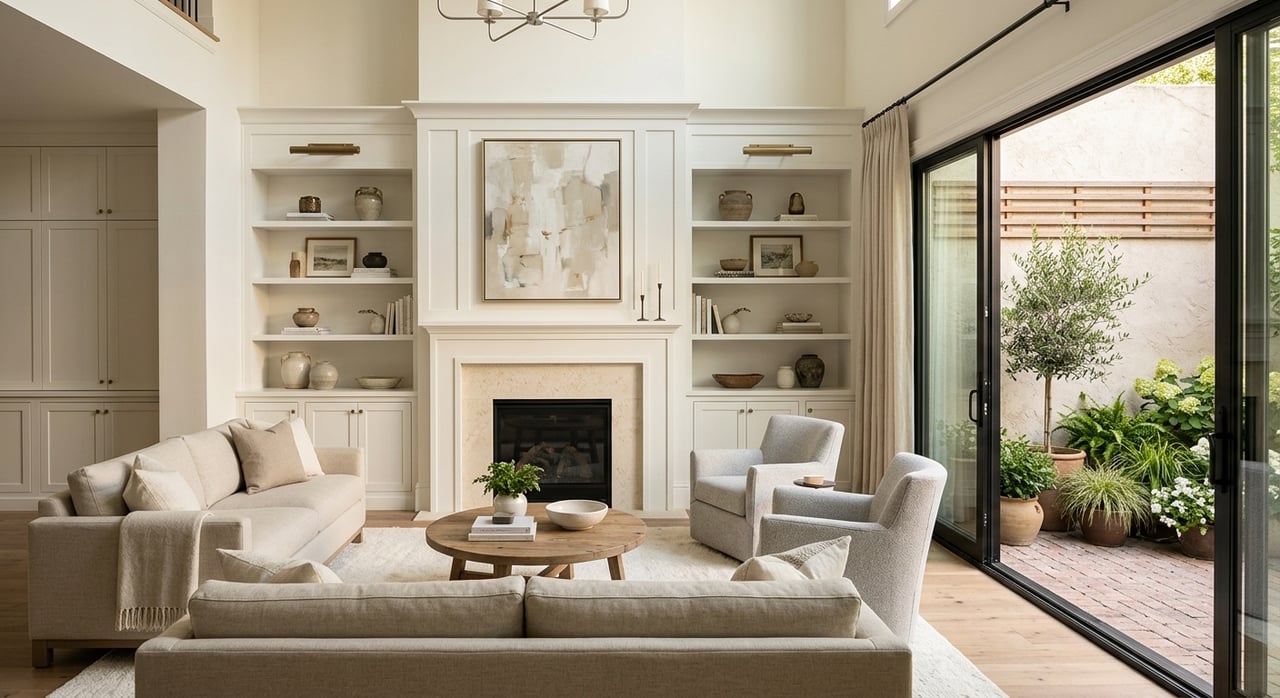
Placentia Condos & Townhomes: A Smart Entry Point?
June 11, 2026
June 11, 2026
Buying in Placentia can feel like a math problem with a moving target. If you want to stop renting or buy your first place without stretching all the way to a detached home, condos and townhomes may deserve a serious look. In this guide, you’ll see how attached homes compare on price, what you actually own in California, and which HOA details can shape your monthly cost and future resale. Let’s dive in.
If your main goal is getting into the Placentia market, attached homes often offer a more reachable starting point. March 2026 data shows a big price gap between detached and attached housing in the city.
Redfin reports a median sale price of $1,274,747 for single-family homes in Placentia. By comparison, the median sale price was $611,379 for condo and co-op homes and $675,940 for townhouses. That difference is the biggest reason condos and townhomes can serve as an entry point for budget-conscious buyers.
Current listing prices point in the same direction. Realtor.com shows detached homes in Placentia roughly from $899,900 to $1,965,000, while condos run about $529,800 to $885,000 and townhomes about $559,990 to $849,900. In simple terms, attached homes can lower the upfront price of entry by several hundred thousand dollars.
Price matters even more when the market leans toward sellers. Realtor.com characterizes Placentia as a seller’s market in March 2026, with homes selling for about asking price on average and a median listing price around $1.095 million.
For you, that means the lower starting price of a condo or townhome can create a more realistic path into homeownership when detached homes are out of reach. It does not mean attached homes are always easy to buy, but it does mean they may offer more workable options if you are trying to stay within a set budget.
A lot of buyers assume a townhome automatically means you own the land under it. In California, that is not always true.
The California Department of Real Estate explains that “townhome” is a physical style, not a legal ownership category. A home that looks like a townhome may be legally structured as a condominium project or as a planned development, and the deed plus the CC&Rs determine what is separate property, common area, or exclusive-use common area.
That difference matters more than most buyers expect. Items like patios, balconies, driveways, parking spaces, or even small yards may be exclusive-use common area instead of fully private land. So before you buy, you want to understand not just how the property looks, but exactly what rights and responsibilities come with ownership.
When you buy in an attached-home community, your ownership may include the interior of the home, while some exterior areas are shared or controlled through the association. In other communities, you may own more of the structure or lot, but still share responsibility for common areas.
The only way to know for sure is to review the governing documents. That includes the deed, CC&Rs, and other association materials that spell out maintenance obligations, use rules, and property boundaries.
In Placentia attached-home communities, the HOA is usually a major part of the ownership experience. The California Attorney General states that HOAs make and enforce rules, and most residents in the community must become members.
These communities are governed by California’s Davis-Stirling Common Interest Development Act, which covers issues such as board elections, finances, maintenance responsibilities, and dispute resolution. In practical terms, buying a condo or townhome often means buying into a system of shared governance along with the home itself.
This is not automatically good or bad. For some buyers, shared maintenance and community amenities are a plus. For others, ongoing dues and rule enforcement feel like too much oversight.
A lower purchase price does not always mean a lower monthly housing cost. HOA dues can narrow the gap, depending on the community.
Current Placentia condo examples show dues of $232 at 2037 Ford, $300 at 1537 E Spruce Unit A, $350 at 1013 Seaview, and $425 at 118 Sweet. One listing at 1013 Seaview ties that fee to amenities including a pool, clubhouse, playground, and picnic area.
Townhome examples show a similar spread. Current listings include dues of $218 at 1578 Topeka, $229 at 1576 Lima Way, and $566 at 2017 Orchard Dr #11.
That range is wide enough that you should treat HOA dues as a core budget item, not a side note. If two homes have similar prices but one carries much higher dues, your actual monthly payment picture can look very different.
The monthly fee is only the starting point. California law requires associations to provide annual budget reporting that includes reserve summaries, reserve-funding plans, possible special-assessment information, and insurance summaries.
That is important because the health of the HOA can affect both your monthly costs and your financing. The Department of Real Estate notes that accurate assessment estimates are among the most important items in the public report because they can materially affect a buyer’s ability to qualify.
In plain English, a lower-priced condo or townhome is not automatically the cheaper choice long term. You also need to ask whether the association appears financially prepared for future repairs and obligations.
If you are buying your first home, it is easy to focus only on getting in. It is just as important to think about how easy the home may be to refinance or resell later.
California Civil Code 4525 requires sellers in common-interest developments to provide a substantial set of HOA documents before closing. These disclosures include governing documents, budget materials, current regular and special assessments, unpaid assessments and fines, unresolved violation notices, and defect disclosures.
If the board has already approved assessment changes that are not yet due, those must also be disclosed. This gives you a better picture of the property and the association before you complete the purchase.
California Civil Code 5300 requires the annual budget report to include a summary of the association’s insurance policies and, for condominium projects, whether the project is FHA- or VA-approved. The statute notes that certification may improve refinancing options and broaden the pool of potential buyers.
That does not mean every buyer needs FHA or VA financing. It does mean project approval status can affect flexibility, both for you now and for future buyers when you decide to sell.
For many Placentia buyers, the answer is yes on price alone. The median pricing gap between attached and detached homes is large enough to make condos and townhomes the most practical path into ownership.
But the best choice is not just about the purchase price. It also depends on how you feel about HOA dues, shared rules, maintenance responsibilities, and the legal structure of the community.
A condo or townhome may be a strong fit if you want:
It may be less appealing if you strongly prefer:
If you are considering a Placentia condo or townhome, slow down and review the numbers and documents carefully. This is where financial clarity can protect you.
At a minimum, review:
This step can help you compare two attached homes more accurately. One may look cheaper on paper, while the other may be the stronger long-term value once HOA health and monthly costs are factored in.
If you are trying to enter the Placentia market without taking on the price of a detached home, condos and townhomes can be a practical first step. The local numbers clearly show that attached homes sit at a much lower price point than single-family homes.
Still, the smartest decision comes from looking at the full picture. You want to weigh purchase price, HOA dues, ownership structure, rules, reserve funding, and future resale considerations together.
That kind of analysis is where a data-driven approach really helps. If you want help comparing Placentia condos, townhomes, and detached options with clear financial context, reach out to Tony Hong for practical guidance tailored to your goals.
Stay up to date on the latest real estate trends.
Etiam non quam lacus suspendisse faucibus interdum. Orci ac auctor augue mauris augue neque. Bibendum at varius vel pharetra. Viverra orci sagittis eu volutpat.
TONY M. HONG | CA DRE# 02144918
Office ID# 02022092
Mobile: (714) 872-7533
Office: (213) 675-6562
tony.hong@tonyrealestategroup.
110 E Wilshire Blvd #G1 Fullerton CA 92832
